Spring in Italy sounds simple when you are planning your trip (sundresses and t-shirts, right)? In reality, it is one of the trickiest seasons to pack for!
The biggest reason is that the weather does not behave the way people expect, and it is not something you can fully predict in advance. You might look at the forecast and see mild temperatures across the board, but what that actually feels like throughout the day can vary more than you would expect.
Because of that, packing for spring is less about choosing outfits and more about preparing for range.
What Italian Spring Weather Actually Feels Like
Even when temperatures look consistent on paper, the experience can shift throughout the day.
You might have a day that sits in the mid to high 60s. In the sun, it can feel genuinely warm, warm enough to shed layers. But step into the shade, head out early in the morning, or stay out into the evening, and it can feel noticeably cool.
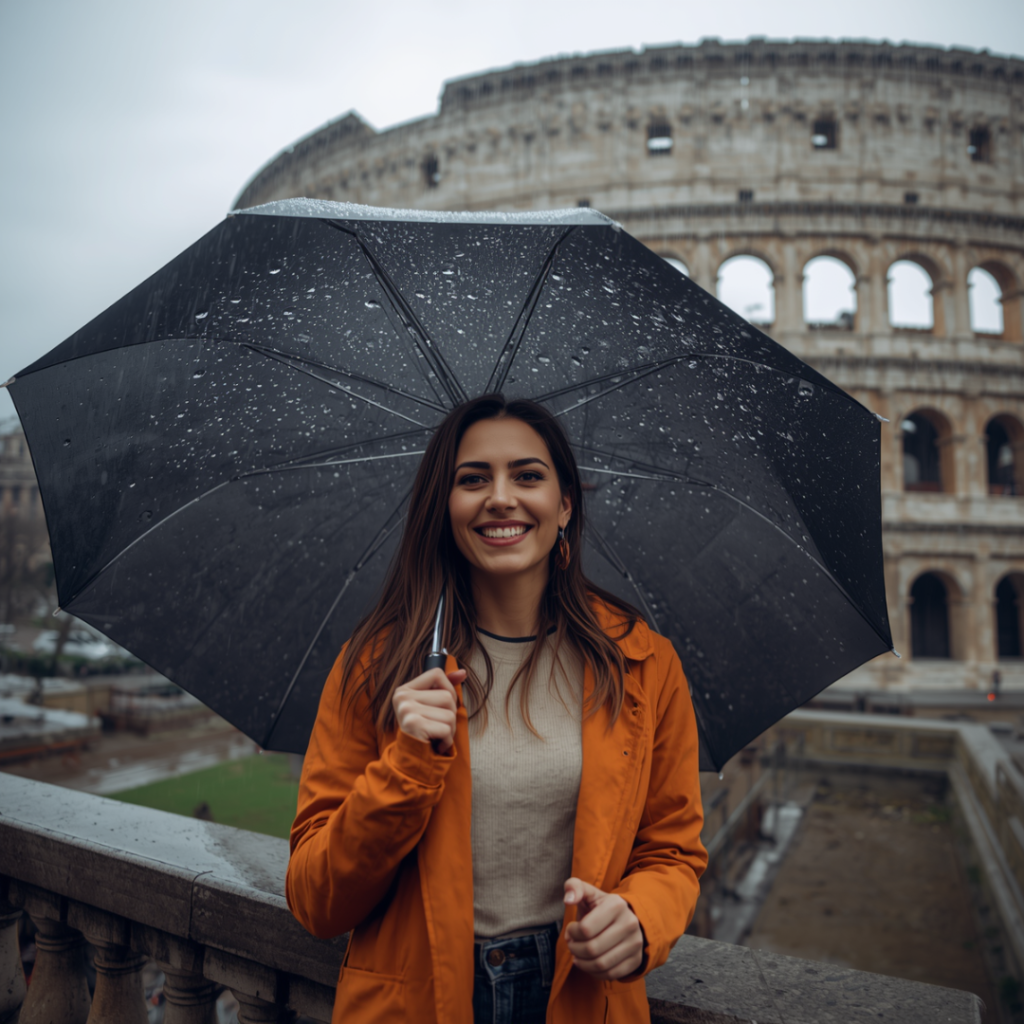
Some days feel like a warm 65, and others feel like a cold 65. That difference is subtle, but it changes everything about what you will want to wear. Spring also still brings occasional rain, often without much warning.
What this means in practice:
- you are dressing for both warm and cool in the same day
- sun and shade can feel completely different
- weather can shift quickly, even within a short trip
✔️ Planning tip: Check the forecast close to departure, not weeks in advance. Spring rewards flexibility.
Why Planning Too Far Ahead Can Backfire
It’s tempting to finalize outfits ahead of time, especially when you are trying to pack efficiently.
In spring, this tends to create more problems than it solves. You may end up overpacking for conditions that never happen or underpacking for a chill that feels more significant once you arrive.
A better approach is to outline what you need, then wait until a few days before your trip to make final decisions.
A Spring Packing Approach That Works
Instead of packing for a specific temperature, it helps to think in layers. The goal is not to pack more, but to pack in a way that allows you to adjust throughout the day without needing to fully change outfits.
A balanced spring wardrobe typically includes:
- light layers that can be added or removed easily
- a polished outer layer such as a trench or lightweight coat
- simple, well-fitting basics that mix together easily
- comfortable but refined walking shoes
- one or two pieces that transition into the evening
This approach keeps your suitcase manageable while giving you maximum flexibility.
What do women wear in the spring?
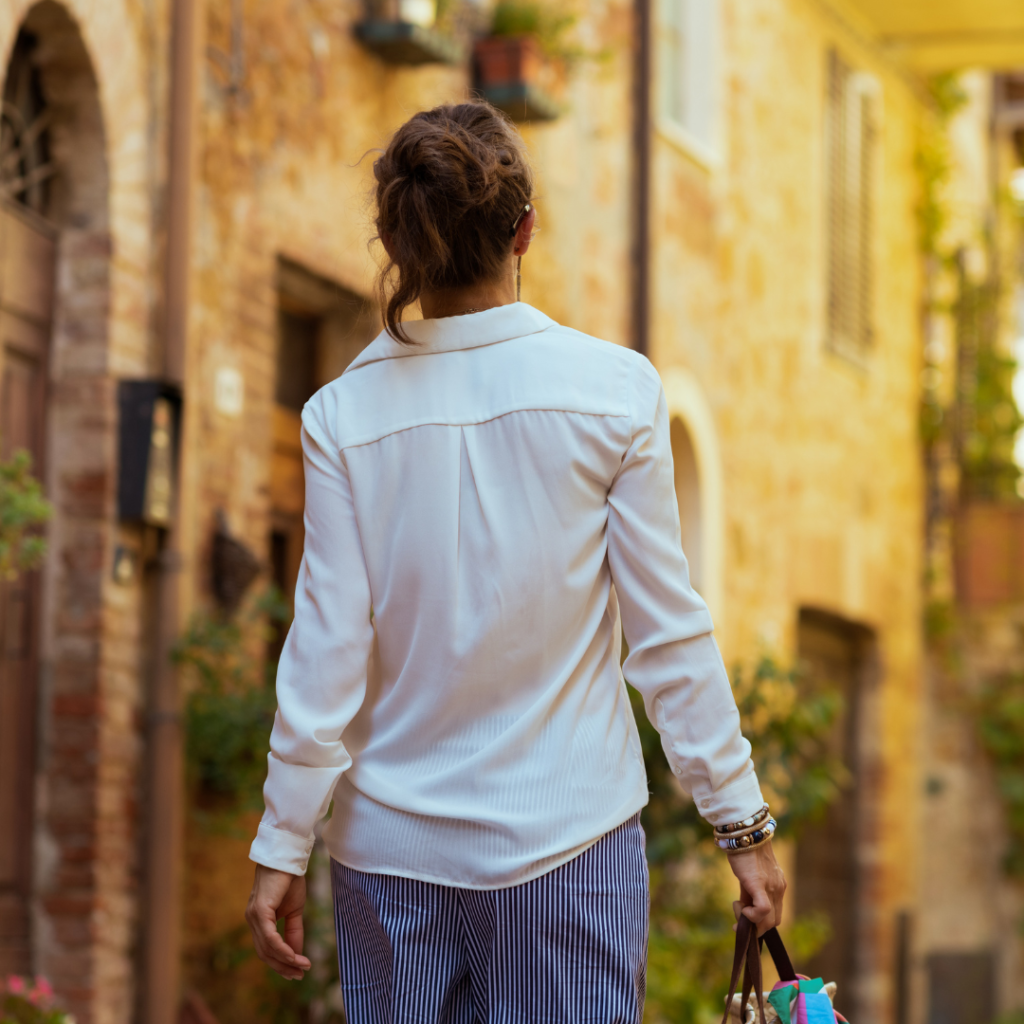
Italian spring style tends to feel effortless, but there is usually more intention behind it than it first appears.
You will notice a balance between comfort and polish. Pieces are simple, but they are chosen carefully and layered in a way that feels put together without being overdone.
You will typically see:
- neutral color palettes like beige, navy, black, white, and soft earth tones
- structured outerwear such as trench coats or tailored jackets
- clean, simple layers that work together
- practical but polished footwear
- subtle accessories like scarves or sunglasses
It’s not about dressing up. It is about looking considered without trying too hard.
What do men wear in the spring?
Let’s not forget about the guys! Men’s style follows a similar approach. It is simple, intentional, and slightly more refined than what many travelers are used to.
The focus is not on being formal, but on looking put together in a natural way.
You will typically see:
- well-fitting trousers or chinos, with clean denim also working well
- lightweight layers such as sweaters, button-down shirts, or polos
- a simple jacket or structured outer layer
- neutral tones with minimal contrast
- clean sneakers, loafers, or leather shoes
The overall effect is relaxed, but still thoughtful.
What Gives Tourists Away Immediately
Let’s preface this by saying that looking like a tourist is not a bad thing! There is often a lot of conversation around trying not to “look like a tourist,” but the reality is that you are one, and that is completely fine.
With that said, if you are hoping to blend in a bit more, whether for comfort or simply to move through the city a little more seamlessly, a few small adjustments can make a difference.
Common things that stand out right away:
- full athletic outfits worn throughout the day
- very bright or overly bold colors
- flimsy sandals, especially too early in the season
- bulky running shoes paired with otherwise dressier outfits
- large, overly casual backpacks in city settings
Variation by Destination
Spring does not feel the same across Italy, and small adjustments can make your experience more comfortable.
General patterns to keep in mind:
- Rome: frequent shifts between sun and shade, layering is key
- Tuscany: cooler mornings with warmer afternoons
- Venice: damp air can make it feel cooler than expected
- Lake Como: evenings stay crisp, even later in the season
- Amalfi Coast: often warmer, but not yet full summer
- Sicily and Puglia: milder overall, but still variable
A Simple Capsule Approach
If you’ve ever watched a ‘pack with me’ video on social media, you’re no stranger to the capsule wardrobe. There’s a reason it’s a popular approach, so we’ve included a simple capsule packing list for spring:
- 2 to 3 bottoms
- 3 to 5 tops
- 1 to 2 lightweight layers
- 1 outer layer
- 2 pairs of shoes
- 1 option for evenings
- a scarf
- a compact umbrella
While this list can and should be tailored to you and your trip, it’s a great place to start.
A Final Perspective
Packing well for spring in Italy is not about getting it perfect. It’s about being prepared for variation! When your wardrobe can adjust with you throughout the day, everything else tends to feel easier.
Bottom line: Let packing be part of the excitement and anticipation of your trip! And remember to leave room for souvenirs 😉
Planning a trip to Italy? Learn more about how we work and whether our approach is the right fit before moving into planning.